Everyday Chinese cooking
Hot-and-Sour Shredded Potatoes
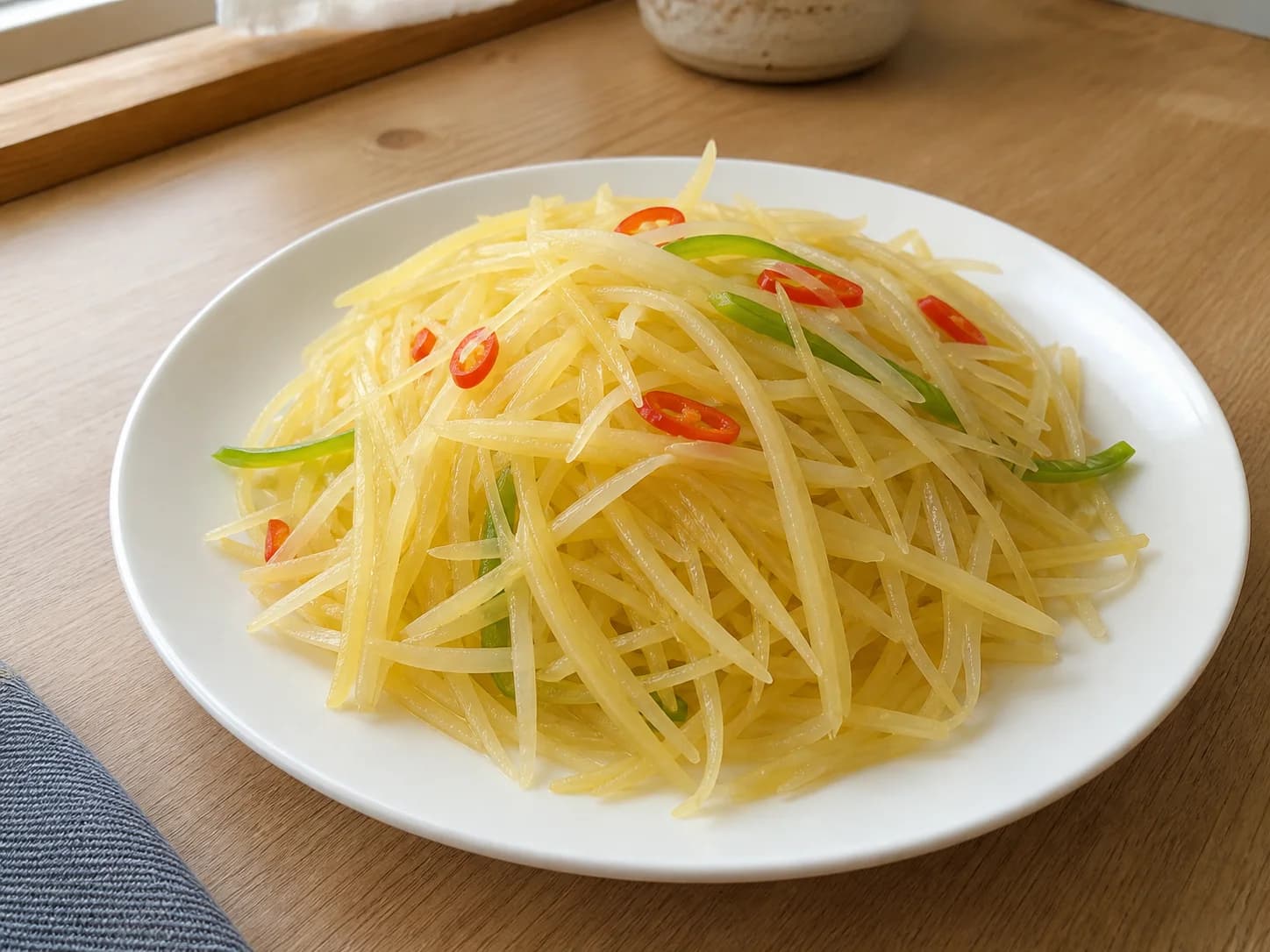
Crisp hot-and-sour shredded potatoes that are less likely to stick, ready for beginners in about 21 minutes.
Written and edited by CookPal
The short answer
Cut the potatoes into evenly sized shreds, rinse off surface starch, and drain them very well before stir-frying quickly over high heat. Add vinegar twice: once for aroma and again at the end for a clear sour finish.
- Servings
- Serves 2
- Prep
- 15 min
- Cook
- 6 min
- Difficulty
- Easy
Step-by-step method
- 1
Cut even potato shreds
Peel the potatoes. Cut them into roughly 2 mm slices, then into 2 mm shreds. If knife work is new to you, use a julienne slicer with its hand guard.
Doneness cueKeeping the size consistent matters more than making every shred extremely thin; mixed sizes cook unevenly.
- 2
Rinse away starch and drain well
Gently rinse the potato shreds in clean water 2 to 3 times, until the water is no longer noticeably cloudy. Drain thoroughly and slice the green pepper if using.
Doneness cueWhen you lift the shreds, they should not drip, and no visible white starch slurry should remain.
- 3
Bloom the aromatics
Dry the pan and add oil over medium-low heat. Add the garlic and dried chilies, stir for about 10 seconds, and move on as soon as fragrant.
Doneness cueThe garlic should barely bubble without browning, and the chilies should not blacken.
- 4
Stir-fry quickly over high heat
Turn the heat to high. Add the potatoes and green pepper, immediately pour 5 ml vinegar around the side of the pan, and stir-fry briskly for 2 to 3 minutes.
Doneness cueThe potato shreds change from opaque white to slightly translucent but still stand up.
- 5
Season and plate right away
Add the salt and remaining 10 ml vinegar. Stir-fry for about 20 seconds, taste one shred to make sure there is no hard raw center, then turn off the heat and plate.
Doneness cueThey should be crisp but not raw, clearly tangy, with no large pool of water in the pan.
How to read the heat
- Use medium-low heat for garlic and chilies, and keep this step short to avoid bitterness.
- Once the potatoes go in, use high heat and keep them moving so steam can escape quickly.
- If your home burner is weak, do not cook more than 350 g potatoes at a time.
Ingredient swaps
COOKING RECOVERY
Pause first, then make one small adjustment
The potatoes stick to the pan
Stop forcefully stirring. Add 1 tablespoon hot water around the edge and quickly loosen them. Next time rinse away more starch and drain more fully.
They turn soft and limp
Turn off the heat immediately and spread them out to release heat. They will not become fully crisp again; next time use a smaller batch and shorter cooking time.
The vinegar is too strong
Add a small amount of unseasoned potato shreds and cook them through, or serve with a plain staple. Avoid repeatedly adding sugar and salt.
Common beginner mistakes
- Cutting potato shreds at very different thicknesses, so thin pieces soften before thick ones cook through.
- Skipping the drain after rinsing; water can splatter in hot oil and makes the potatoes steam-soft.
- Cooking garlic and chilies too long in the first stage, which creates a bitter taste.
Frequently asked questions
Why rinse or soak potato shreds?
It removes loose surface starch, which helps reduce sticking and scorching. Drain them thoroughly afterward.
How do I know they are cooked but still crisp?
They turn slightly translucent, no longer have a hard raw center, and still hold their shape with a light crunch.
When should I add the vinegar?
Add about one third around the side of the pan at the start, then the rest just before plating. This keeps both aroma and acidity.
Can I use a julienne slicer?
Yes. It makes the size more consistent, but use the hand guard and stop using it by hand when the potato becomes small.
Why did my potatoes release so much water?
Common causes are poor draining after rinsing, overcrowding the pan, low pan temperature, or adding salt too early.
Editorially checked; kitchen testing is being added
Published 2026-07-22 · Last updated 2026-07-22